My First Pow Wow

Upon moving back to America six months ago, I became interested in learning more about the Indigenous culture here.  I’ve been a sound healer for several years, and know that there are aspects that borrow from indigenous traditions and healings.  I want to know more, and have gone to an in person workshop and taken a virtual course by indigenous healer Asha Frost.  But this is not enough, I want to expose myself more to the knowledge and traditions out there.

And so this weekend I went to my first pow wow, it was a small one held in Oxnard College. But it was beautiful.  People from various tribes came from different parts of California and the surrounding states.   There was aspects of ceremony and ritual, with sage burning, as communal drums played.  Traditional colorful attire worn and gourd dances were performed.  There were dances that honor various individuals in attendance whose family members donate money to on the ground, as they stand and dance behind them.  The money is picked up by another individual, afterwards often times the individual honored, then offers the money to the drummers and singers who played the entire time.  It was fascinating to witness the energy of money being performed in front of our very eyes. 

The emcee for the day was a veteran, and I was surprised to find many present were veterans, including two Vietnam vets. At one moment he stated, “During funerals we go to, there are 6-8 pallbearers.  What about in life?”  He further shared that we should not wait until our deaths to have 6-8 people carry us, depend on others while you are alive.  He reminded the crowd that we are all human and have our vices, but collectively we can help each other out.  He found this to be true for gourd dances. People have been cured of various ailments, particularly returning back from war through this collective dance. 

It was beautiful to witness generations of families are present sharing the lineage of wisdom passed through song and movement. I began to tear up seeing this display of support and hearing the loud strong hearty drum beat, as the drummers beat on one large drum in unison.  Seeing this beauty of culture displayed reminded me of the African drum circle I attended in New Orleans next to an ancient tree, where African Americans have been meeting Sundays since the time of slavery.  It was the one time of week they were allowed to collectively worship while their masters went to church. In both of these instances, I felt I time travelled and saw the ancestors and their kin playing the drums and dancing to demonstrate solidarity, freedom, and connection.

The longer I am in America, I’m trying to truly understand what this country is about.  What do we represent? What is freedom? Where did we come from?  Who are the ancestors of the land and all that inhabit it now? What can we learn from them? What wisdom can be gained from all that was lost and somehow saved through traditions such as this?

“Or can you be like you, and reconnect to your own sacred Medicines? Your own beautiful ancestry? Your own power, presence, and brilliance? I see you wanting to. I see you aspiring to. I see you reconnecting. Can you be like you? As I reclaim and remember me. And then, we can finally walk in right relation to each other.” 
― Asha Frost, You Are the Medicine: 13 Moons of Indigenous Wisdom, Ancestral Connection, and Animal Spirit Guidance
The End is Our Beginning

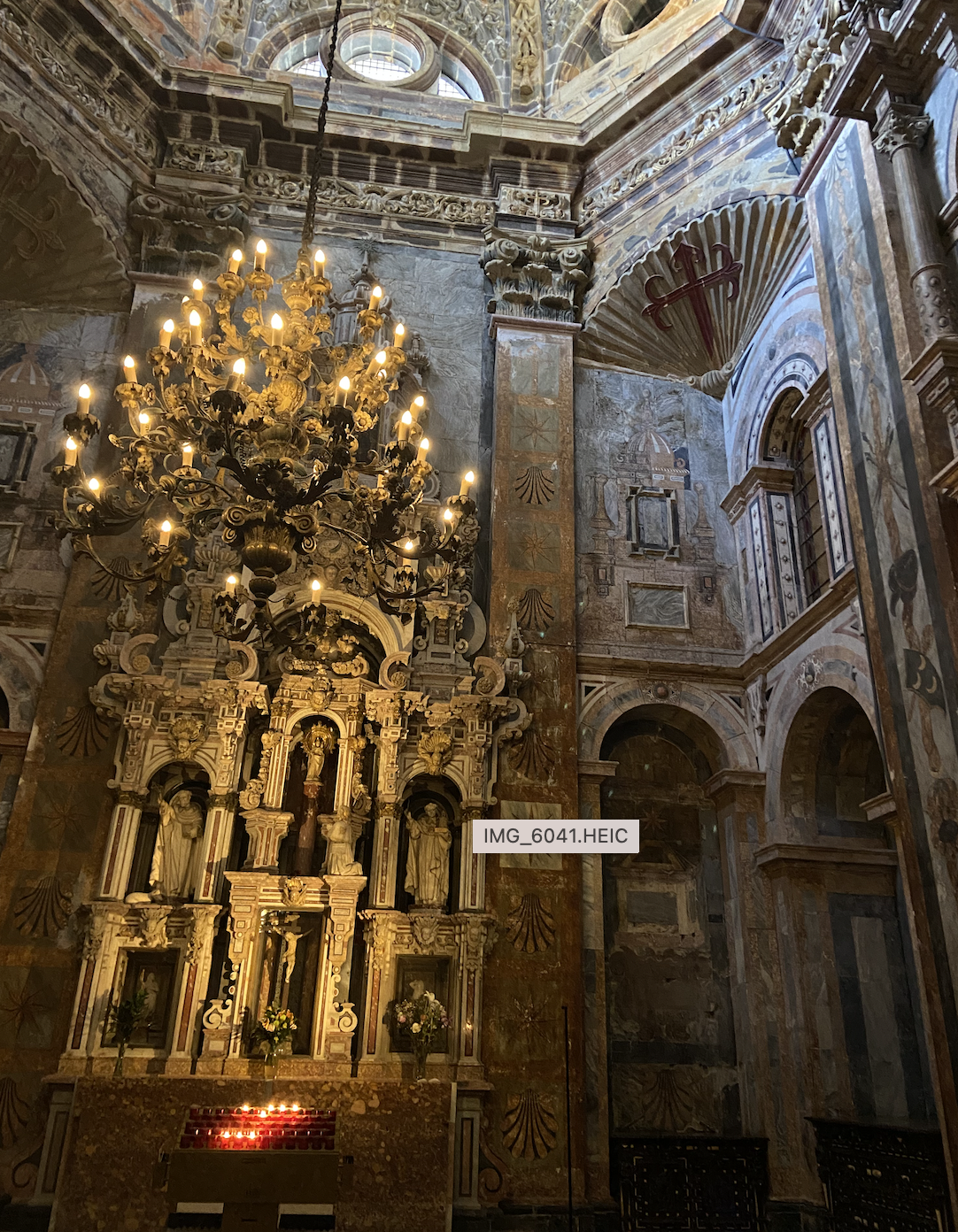
            We had arrived in Santiago de Compostella, which is the endpoint for many people who choose to do the pilgrimage of Camino de Santiago.  The film The Way popularized this bucket list journey.  The most traditional path is to take the Camino Frances route, which begins in St-Jean-Pied-de-Port France, and then transitions into Spain through the Pyrenes mountains and traverses for 500 miles.  Generally, one needs to do at least 100 kilometers to receive a certificate of completion.  Regardless of how many miles one walks, generally the destination was our starting point.  

            It was our initial day in Spain, and we were beginning our journey at everyone’s end.  On our first night, we went into the Cathedral, that houses the remains of the apostle St. James.  For hundreds of years people have walked to this location for this specific purpose, to see where St. James lies.  It seemed taboo.  Had we earned the right to visit without yet putting on our walking shoes?  Our walking journey was to begin the next day, but we could take in the evening’s festivities of this celebrated town. 

            I am not new to the Spanish culture.  This was my 21st trip to Spain, and my second time embarking on this pilgrimage in Santiago.  Yet this time our route was to end in Finistere, also known as the end of the world.  It’s been said that this Celtic path predates the Catholic pilgrimage.  We were hopeful the exploration of the city that evening would massage out the kinks that occurred at the airport hours before.  We were lucky it did.  

            After securing a walking stick, a delicious meal of tapas and patatas bravas, a tasty pastry, and rations for the next day’s journey, we strolled the streets to see what the night would reveal.  The tourist shops had now closed, and it was solely bars that were open at this hour.  Then we stumbled onto an archway by the church.  It served more as a portal.  Generally during the day, a musician plays his bagpipe, demonstrating the Celtic traditions that still exude in this land of Galicia.  But at this hour, the bagpipes were packed away, and were replaced with an opera singer.  

I love most street performers.  They move an audience to stop the busy-ness of their lives and slow down, and simply take in the gift of music they are sharing.  The opera singer sang several popular opera songs, the crowd slowly started to build.  Then the tunes changed, and he began singing “My Way,” which generally isn’t my favorite song, as it reminds me of an American middle aged drunk man’s go to karaoke song, as a bar closes.  But there were other people in the audience that seemed to enjoy it.  A tiny group of three older people who looked as if they were tourists and friends had their arms around each other.  They swayed and sang.   The opera singer appreciated their immersive experience.  When it was time for the chorus, the opera singer pointed to the trio and allowed them to take the stage.  “I did it my way.”  People had stopped to sit on the steps, and observe this magical moment.  For a brief passing period of time, we were all connected.  I couldn’t help but cry witnessing this beautiful example of collective gratitude and mindfulness.  These were not tears of sadness or worry for my future.  These were tears of joy I was able to experience this moment of collective bliss.  

            Perhaps starting at the end wasn’t a bad decision.  It was how this journey was to begin.  We could harvest the beauty and love shared from the evening onto the next day’s 23 kilometer trek.  I couldn’t wait to see what was next in store.