“Change your language and you change your thoughts.”
Karl Albrecht
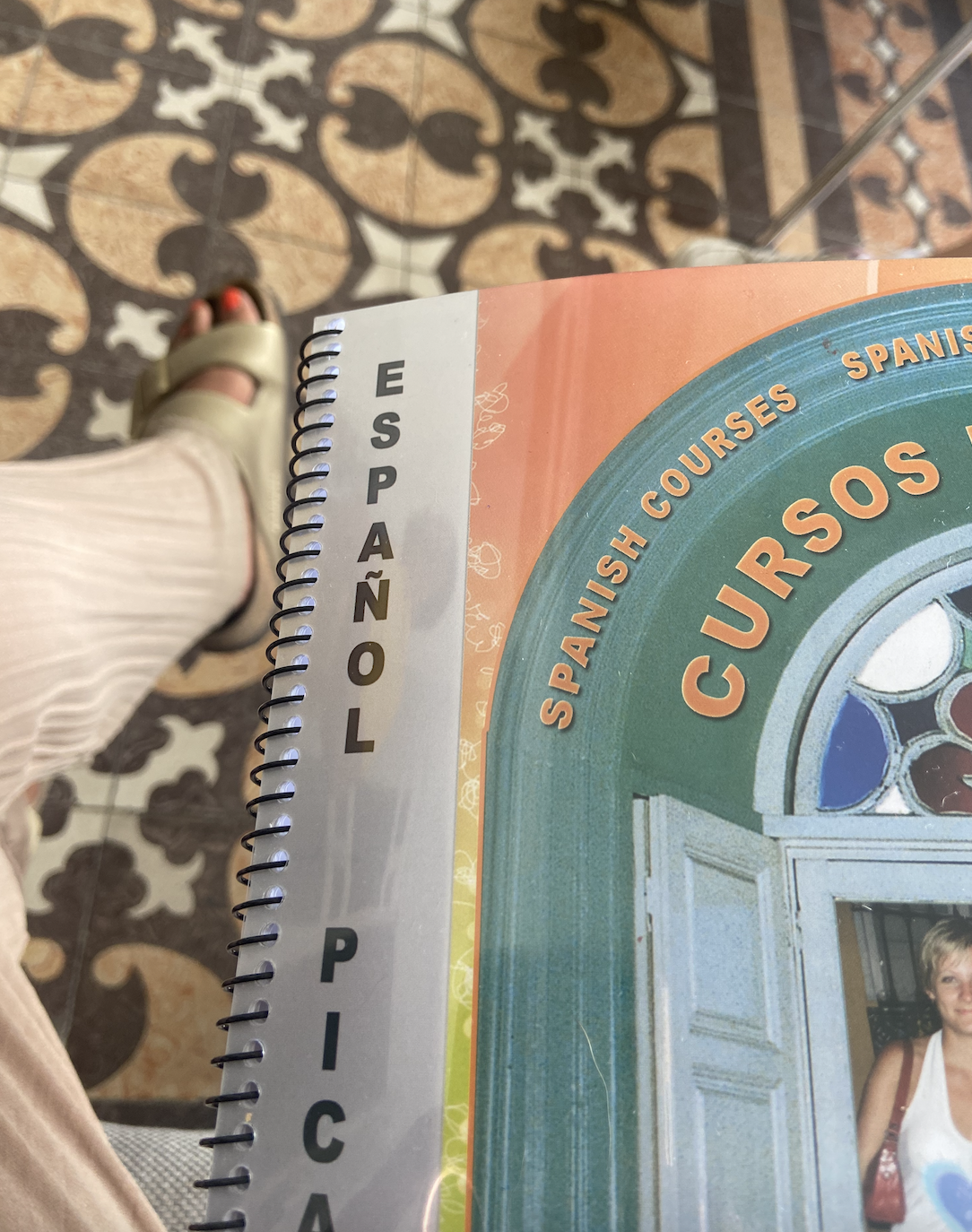
Last week I enrolled in a month long intensive Spanish course. Although I have officially moved here nearly six months ago, I have put this off. While in Paris last year, I took three months of French, and it made me cringe. I hated starting from scratch, pronouncing everything all wrong, and be corrected constantly. I didn’t think I would need Spanish here, but I have recognized and accepted that my Spanish was more of a tourist Spanish. Additionally, Andalucians seem to sometimes speak a different language, with shortening the words or have nicknames for things that did not make sense. Who knew that mala leche (which is translated to bad milk) equates with having a day where you are pissed off and angry? If I wanted to improve, it required an intensive. To commit to this was to commit to a part time job, twenty hours a week, Monday through Friday for four weeks. But now I could do it.
And I was pleasantly surprised.
It was actually somewhat enjoyable. I had taken Spanish class in high school, college, and did an immersion in graduate school. As we went around the room, verbalizing our background with Espanol, I realized it has been over twenty years since I had taken Spanish (Duolingo doesn’t count). I could have compassion for myself with forgetting some things along the way.
In the classroom, sat next to me a 14 year old Bosnian girl, living in Sweden. She showed me texts from her boyfriend and teacher, gossiping about her life as if we knew each other for years. She guessed me to be in my 20s, when I shared I was in 40s, she was stunned. And I was flattered. The class size generally stayed around 8 people, from other countries such as Morocco, Netherlands, England, and Italy. Although we were collectively learning Spanish, we were learning about each other. Our conversational skills were put to the test as we shared our background information, occupation, likes, dislikes, hobbies, and family dynamics. “Me llamo Tricia. Me gusta caminar con mi amigo. Soy americana, pero ahora vivo en Malaga por seis meses…” This was repeated throughout the week, because with four hour long sessions, the teachers rotated in and out. We could practice hearing different accents, dialects, and experience various teaching styles.
But all were pleasant. Yes we were corrected at times, but it was with encouragement. For some reason, my experience with learning the French language is it was tiresome and draining, it probably didn’t help that we wore masks for most of the sessions. I recall practicing my Spanish with a local here several months ago, who was training to be a language teacher. He laughed when I pronounced various words, and therefore it shut me down. Why open oneself to ridicule in the hopes of improving? A warm encouraging environment is so necessary to offer padding to those learning something new. If you fall, it’s not so bad. You are then willing to try again, criticism didn’t knock you down. At least for me, this is my preferred learning style.
And so I am ready to enter week 2 of classes, with more energy, less cringe, and curiosity of what will be revealed next. As I write this, I am full of appreciation for the teachers out there who have the kind patience in working with their students, and for all students out their who have self-compassion as they learn something new.


 It Only Takes A Smile