Saturday Night

Saturday Night Live has been a show I had always admired. A variety sketch comedy show with celebrity hosts, musical guests, political and social commentary, and humor that can connect a nation. Watching the show growing up was a way to connect with friends, love interests, family members, and colleagues.  It blows my mind the talent that continues to hail from this show throughout the years.

Recently a film was released entitled Saturday Night about the first ever Saturday Night Live taping, and how it nearly lost it’s slot to a Johnny Carson rerun. The film follows creator Lorne Michaels and the unknown comedians that were going to change weekend television. We witness the chaos that ensues in trying to coral a group of rule breaking one liner comedians, writers, and staff before the first taping. One truly gets a sense of how much work from dozens of people that are needed to make a new show succeed, when the network expected it to fail.

As I watched the film, it reminded me how many groups of people embody a similar dynamic in their own work settings.  Talent collaborating and joining together for a particular mission, despite the external naysayers who expect the worst from a group’s collective effort.  This is true not just of comedians or actors, but of a front and back of the house staff at a Michelin restaurant, a Special Operations flying squadron and their maintenance crew, a psychological staff at a community mental health center, a surgical team ready to perform a difficult procedure, a spiritual retreat center holding space for retreat attendees, a fire department working overtime containing spread from a recent fire, or a group of teachers ready to start a new year.  For a moment in time, these people join together for the purpose of serving others. All skills are needed, welcome, and are joined in unison.

Although I am sure the events that led to the first Saturday Night Live taping were erratic, insane, and chaotic, it can be appreciated afar.  At a distance, we witness the orchestra conductor Lorne Michels hearing the notes of each of the musicians individually and collectively.  There is a line in the film prior to the taping, where Gilda Radnor says to John Belushi “Do you have nostalgia for a moment when you are still in it? I mean like you are in the moment but you are also looking back on it, like right now I’m here right now, but I’m also thinking about this moment 20 years from when we’re walking by this ice rink. Maybe it’s Christmas, and our kids are dragging us by our pinkies, presents loaded on our shoulders, all we can think about is this moment right before we went on tv.”  In the midst of big unifying moments, do we catch snapshots like this? Do we have nostalgia for a time as it is happening, knowing it cannot be replicated in the same way?

There’s a beauty with this film, it serves as a reminder of how we all need each other to pull difficult tasks off. We all play a role, nobody’s is more important than another.   This film captures a day in the lives of people before they hit it big, their passion for the arts, avante garde thinking, rivalries, support, laughter, human struggle, and effort to bring this show onto air.

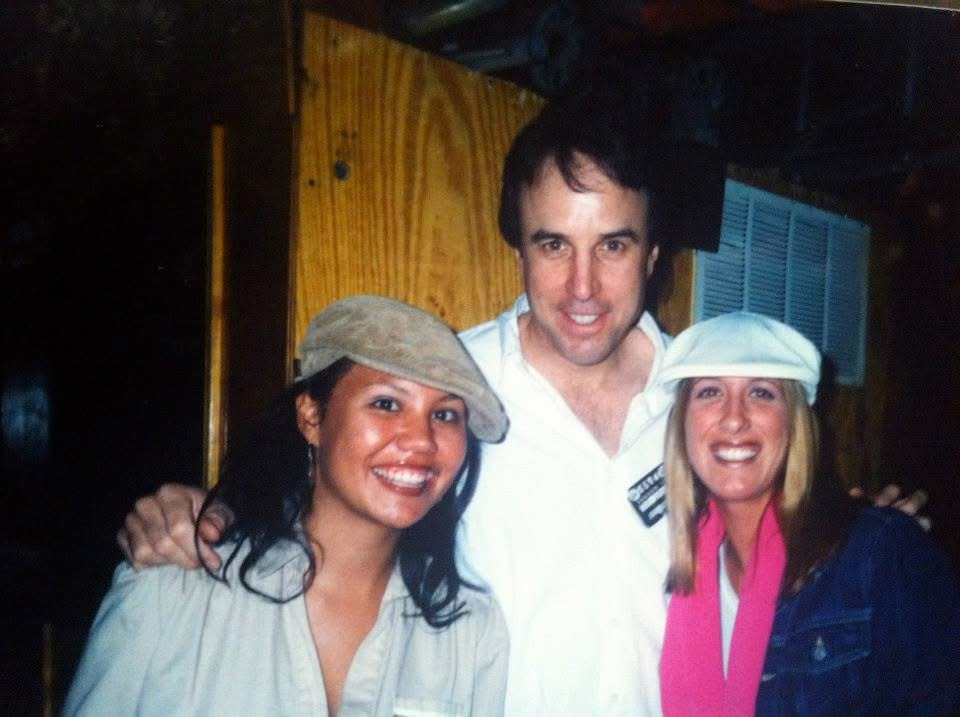
Over the years, I’ve been lucky enough to meet some actors from SNL while living in Los Angeles.  People I watched in my living room during my junior high years, I was able to share my atmosphere with, just for a moment. Although I lived on 49th street in New York City, the same street as NBC studios, I never did make it to a taping. Perhaps one day, I will walk on stage where the magic has happened for decades and creatives continue to push the boundaries in an effort to make the American audience temporarily reprieve from their everyday problems and laugh. But for now I can watch this film, and appreciate the guts, glory, courage, and faith it had to put the initial production on. And in the meantime, I can take Gilda Radnor’s words of advice and have nostalgia and savor the moments I am living in as they are occurring.

Comfort in Comedy

Comedy is the blues for people who can’t sing.-Chris Rock

            Am I an outsider looking in, or an insider looking out?  I couldn’t help but reflect on that as I watched comedian Chris Rock yesterday.  I was lucky enough to see Chris Rock in a sold out venue of only 360 people at the Apollo Theater in Paris.  He entered the stage wearing all white, the lights were dimmed.  When he tried to speak into his microphone, the power on the stage went out.  As the staff worked quickly to fix this, he offered to the audience, “I’m a little off, but you’ll have a good show.  We know how good I am in crisis.”  Laughter eased the discomfort with that one line.  He promptly alluded to something we were all thinking.  Would the infamous Will Smith slap heard internationally two months prior be addressed?  And it was with an insinuative remark.  

We were in the 12th row, and it was surreal.  The title of his show was called Ego Death, and I couldn’t help but be curious as to the meaning of this title.  As I watched his show, I viewed it through the lens of my old psychology profession.  This is how he chose to deal with this experience.   His craft of storytelling and boldly sharing his opinions in a palpable funny way, was his cathartic journey.  This is how he is intentionally dealing with that media driven experience.  Instead of being a victim, he is using it as fuel for his work.  In his set, he shared that people get attention through either being infamous, excellent, or a victim.  He reminded the audience we have a choice.  And there was power to that statement.  Although he didn’t state it, we knew Chris was opting to not be a victim in this narrative.

 To be an American, listening to an American telling jokes in France was like an out of body experience.  I haven’t lived in America for almost nine years, most of that time having spent lived in the United Kingdom.  But those years were spent working with Americans as a therapist.  The USAF to be exact.  Therefore, I have yet to pick up any type of accent or new language.  I still sounded ‘murican.  I could relate to the jokes because I still identify as an American, my family and friends reside there, and I visit annually.  But how American was I?  Was I American in my ideals, values, or daily living?

            As the show continued, I listened to Chris Rock rant about political hot topics, celebrity gossip, the state of homelessness, racism, the pandemic and the overused political correctness that have taken over the country.  I laughed at the jokes, as so many were based on reality.  But as I laughed, I couldn’t help but think how sad the state of the country was, and wondered if I want to return as a citizen in the future? Did Chris Rock even want to return?  He asked the audience if abortion was legal in France, and joked that maybe he could get one while he was here. 

            And Chris also talked of things that are universal, not just not the crisis of all things American.  But the creative process.  Chris shared at the beginning of the show how art sucks these days.  This includes all types of art: movies, television, music, books, tangible art.  He stated all art sucks because there are layers of people who oversee the creative process of what actually gets distributed to the public.  Art is out of the artists’ control today and is censored.  He exclaimed that all mainstream art seems to be out of one’s control, except that of the art of a standup comedian.  A standup comedian is in charge of their own acts and the words that come out of their mouths, not the publishing world, or the television executives, or the publicists.  As I heard that comment, I couldn’t help but feel a sense of awe and jealousy with that statement made.  I’m in the process of my book proposal being pitched, and I am keenly aware that much is out of my control.  Yet comedians take their art straight to their audience.  And they can get away with it. 

            Just as the olden days of a royal court, the only ones who could get away with telling the truth and not be punished were the court jesters.  Buttons are pushed, and often things slightly teeter on the edge of controversial.  But then laughter breaks up the discomfort.   Viewpoints are shared with audiences in a way they can swallow it. Shock, laughter and wit can go a long way.   Their intelligence is hidden with smiles.  

            As I watched Chris Rock, I reflected on the show’s title: Ego Death.  Ego Death disarms the audience, it humbles him, and allows us as a group to take in what he says with more ease.  Although he speaks of his lavish lifestyle and the privileges that fame and money bring, he is grounded by being a human being, with the woes of parenting, dating during midlife, and the joys of co-parenting with an ex.  It’s a reframe.  We are curious as an audience to see this man as a victim of another celebrity’s slap, but we see how he’s fueled to redirect the narrative.  

            Perhaps we also re-write the current narrative of America.  It does not only have to be the bold, outrageous, wild, divided, selfish nation that the media has painted.  I feel I’m only watching it from afar, like a reality television show that I cringe to admit I’m a fan of.  As a nation, we seem to be getting attention through either being infamous, excellent, or a victim.  All aspects are there.  We have a choice in how to frame the nation.  And what if our ego death as a country is approaching?  This may be the key for our story to be reframed in a way that is palpable to the world and ourselves.  Laughter may be key to get through and beyond this moment.